Sitting Skin:
Hanji Reborn as Bioleather | 2025
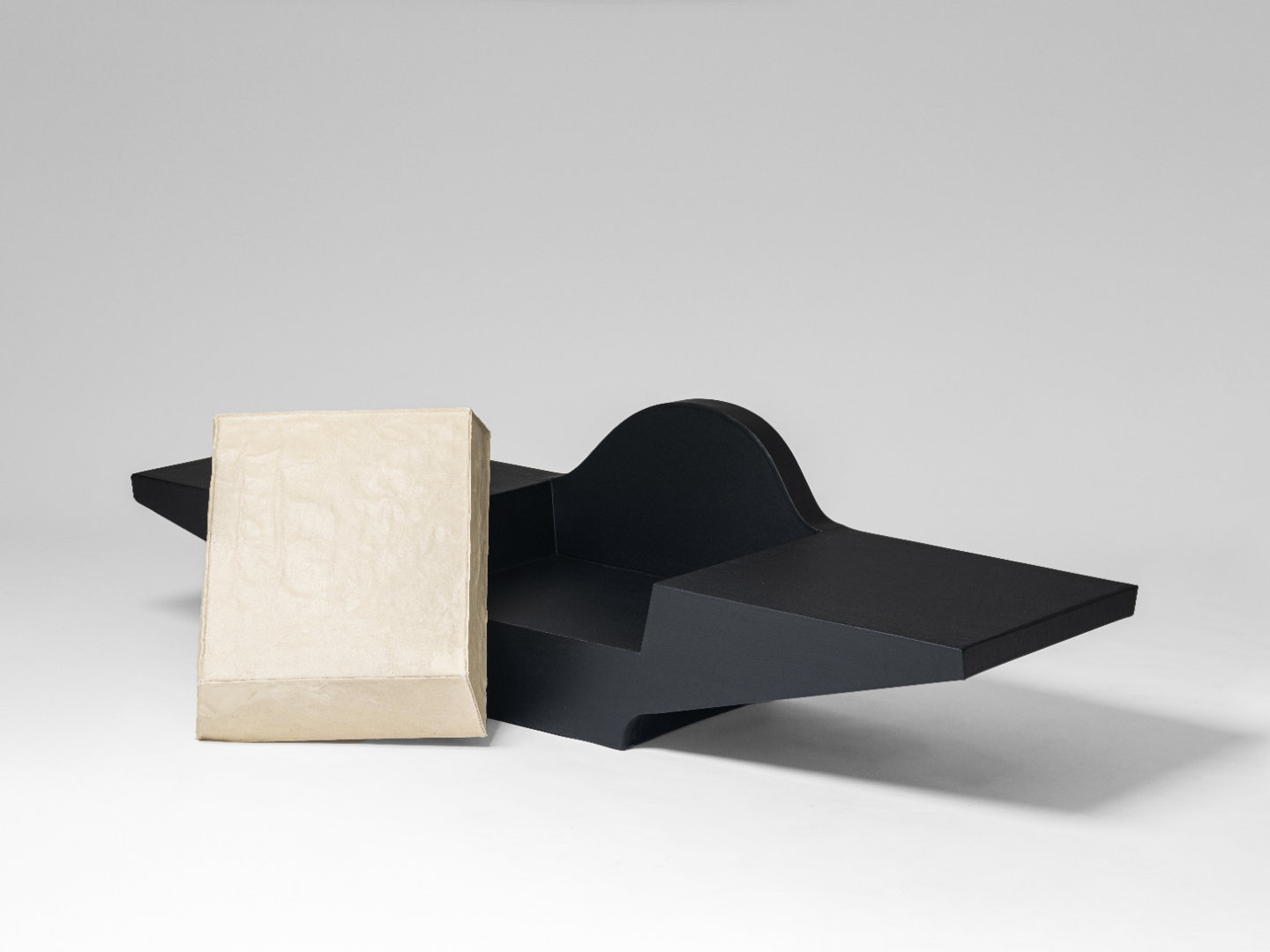
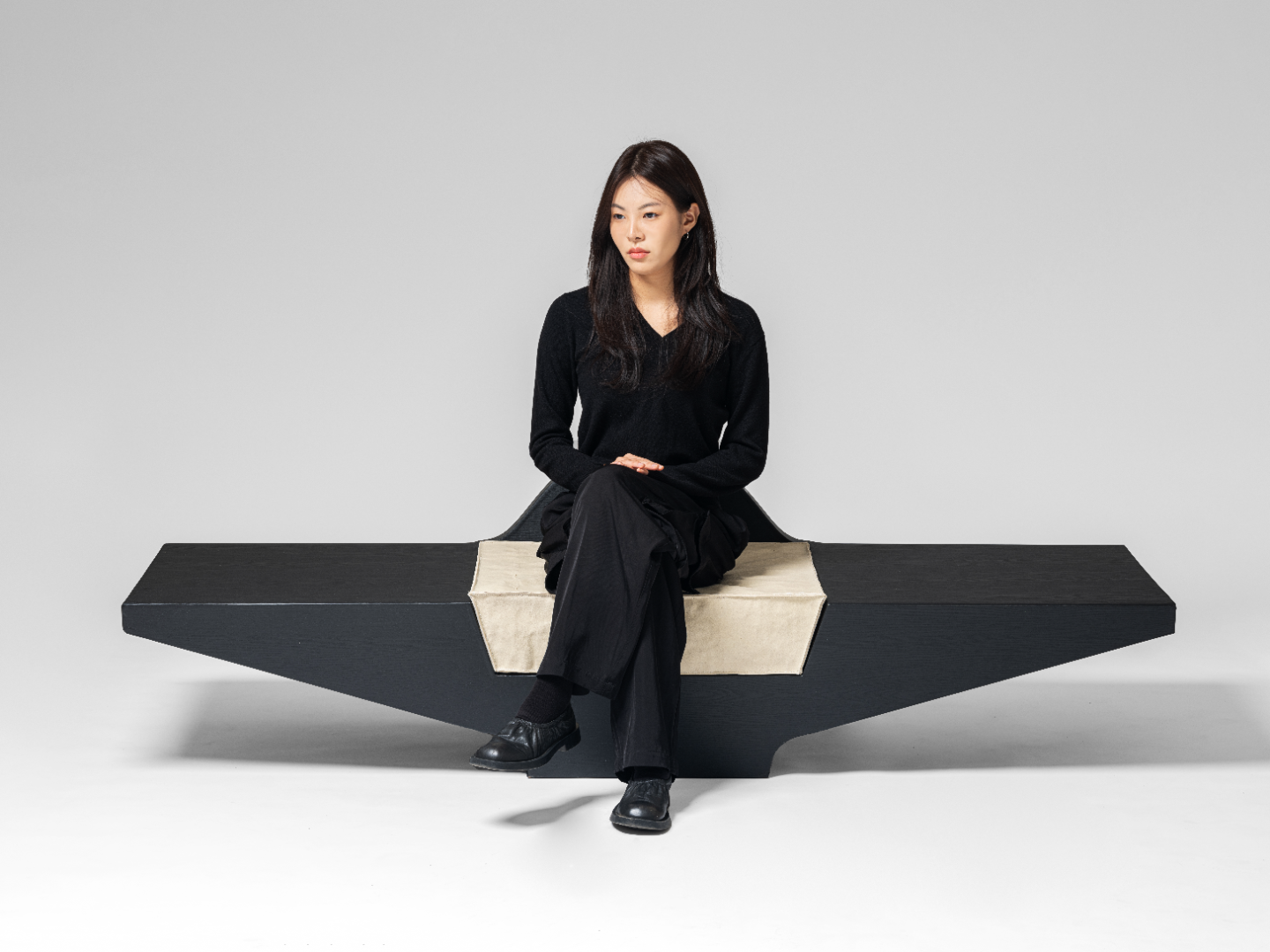
The Sitting Skin creates a dialogue between stable structure and experimental surface. The chair’s wide, dolmen-inspired profile serves as an architectural base, while the bioleather panel serves as both visual and conceptual focus. Here, bioleather is the focal point of material experiment, a formative factor in the cushion’s texture, aging behavior, and ecological narrative, while the wooden structure offers a stable architectural counterpoint.
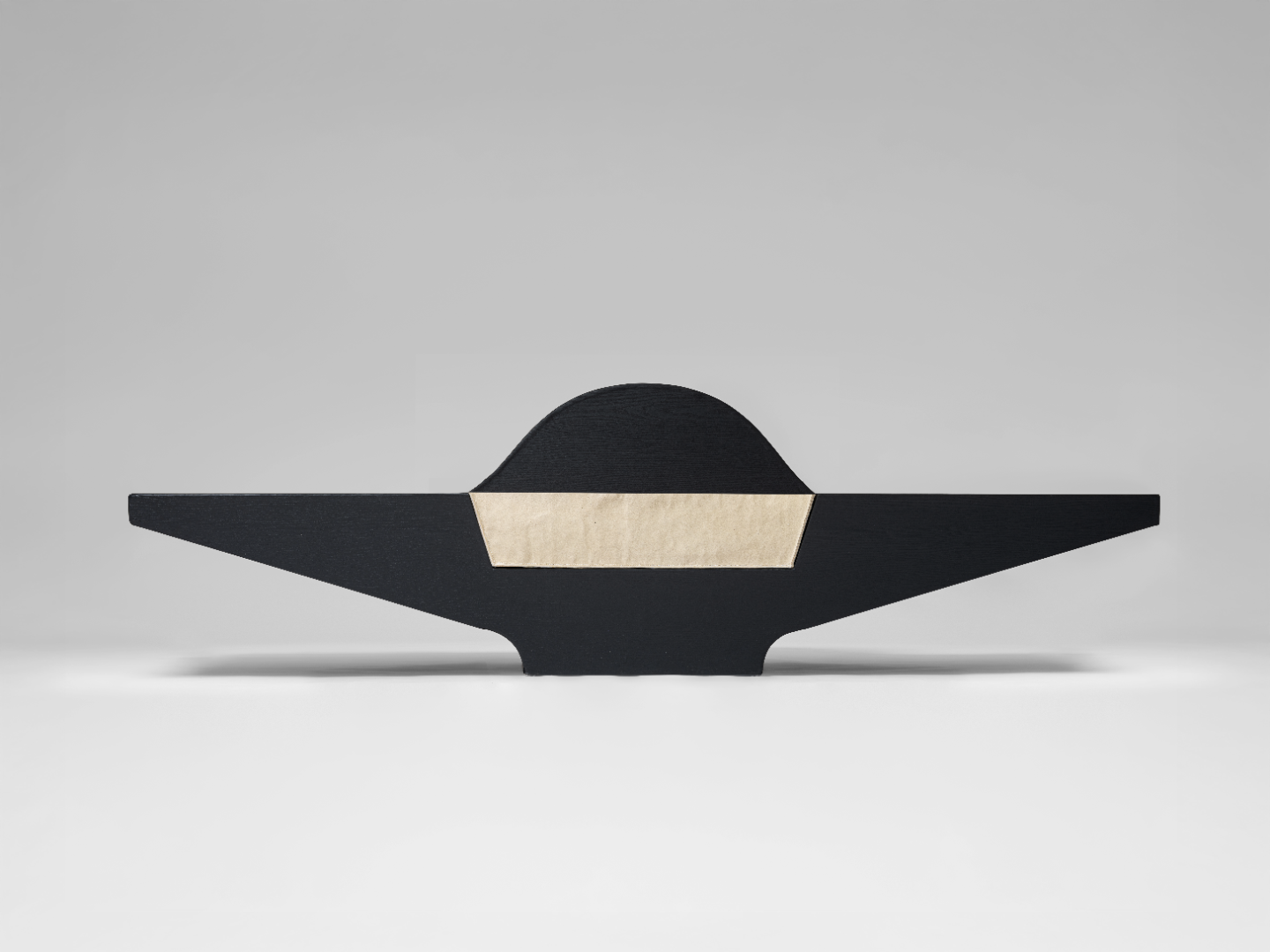
How can biomaterials challenge assumptions about durability and comfort in furniture?
What new tactile experiences emerge when upholstery prioritizes ecological performance over industrial standardization?
Materiality Test
-
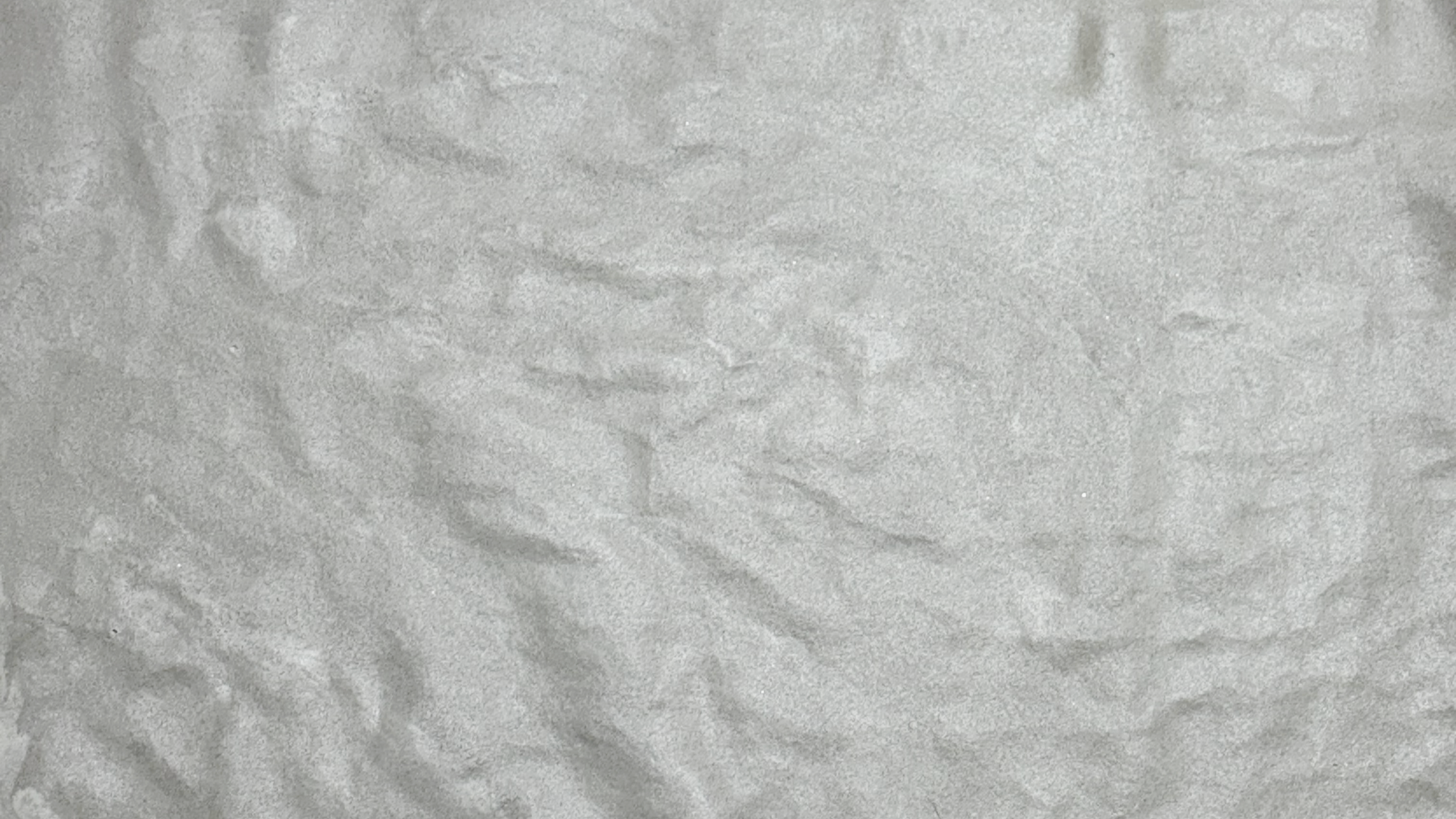
~13–20 percent elongation (15mm gauge, manual pull)
-
Structural softening and swelling after 5 hours submersion.
-
Visible surface wear at ~300 rubs, breakhrough around ~500 rubs
Research
Ecological impact on traditional leather industry
-
To produce 1 m² of leather produces about 22.48 kilograms of CO2e.
-
Upstream: 68%
Beamhouse: 5%
Tanning: 7%
Post-tanning: 14%
Finishing: 4%
General: 1%
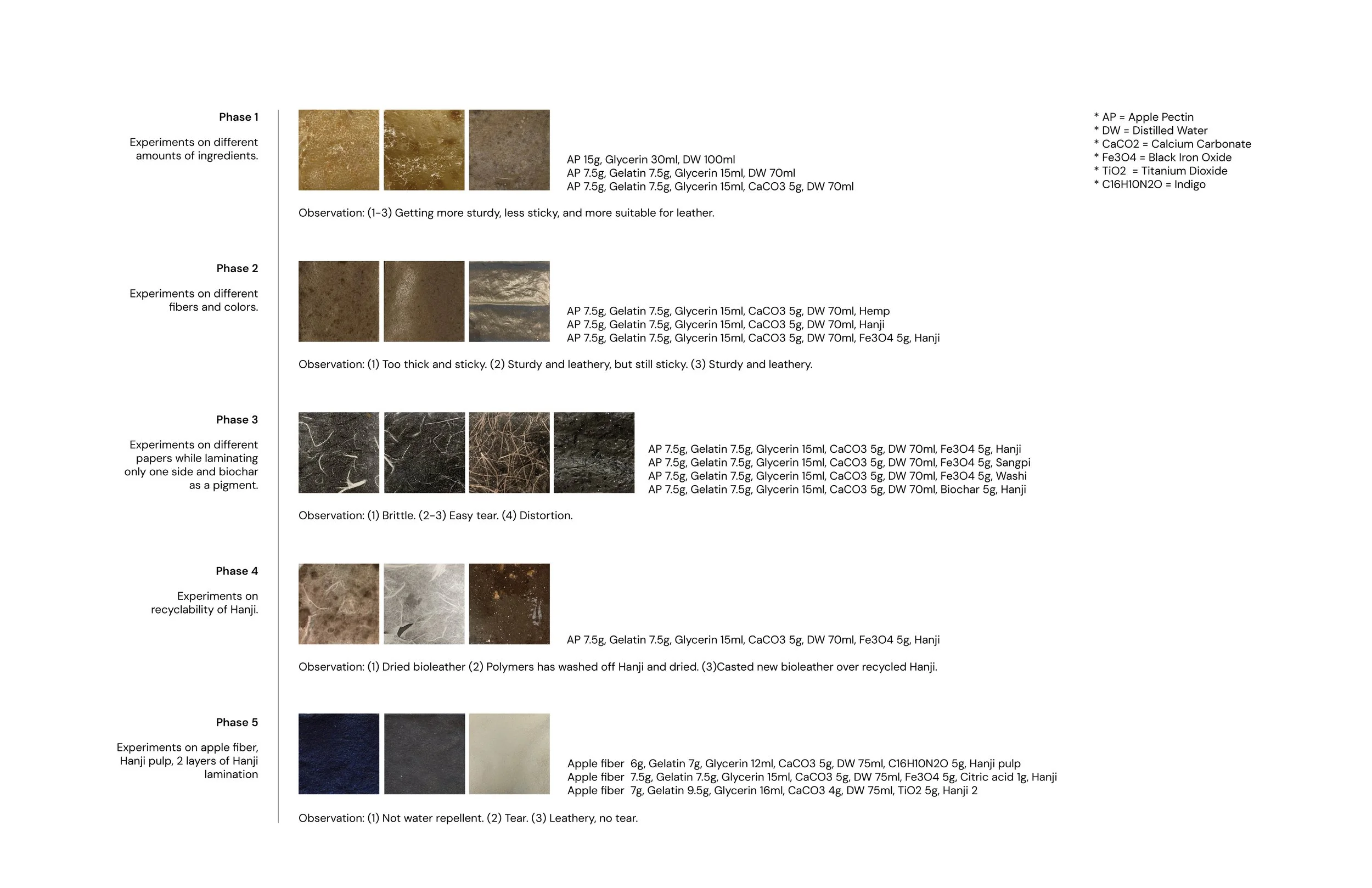
Bioleather Experiments
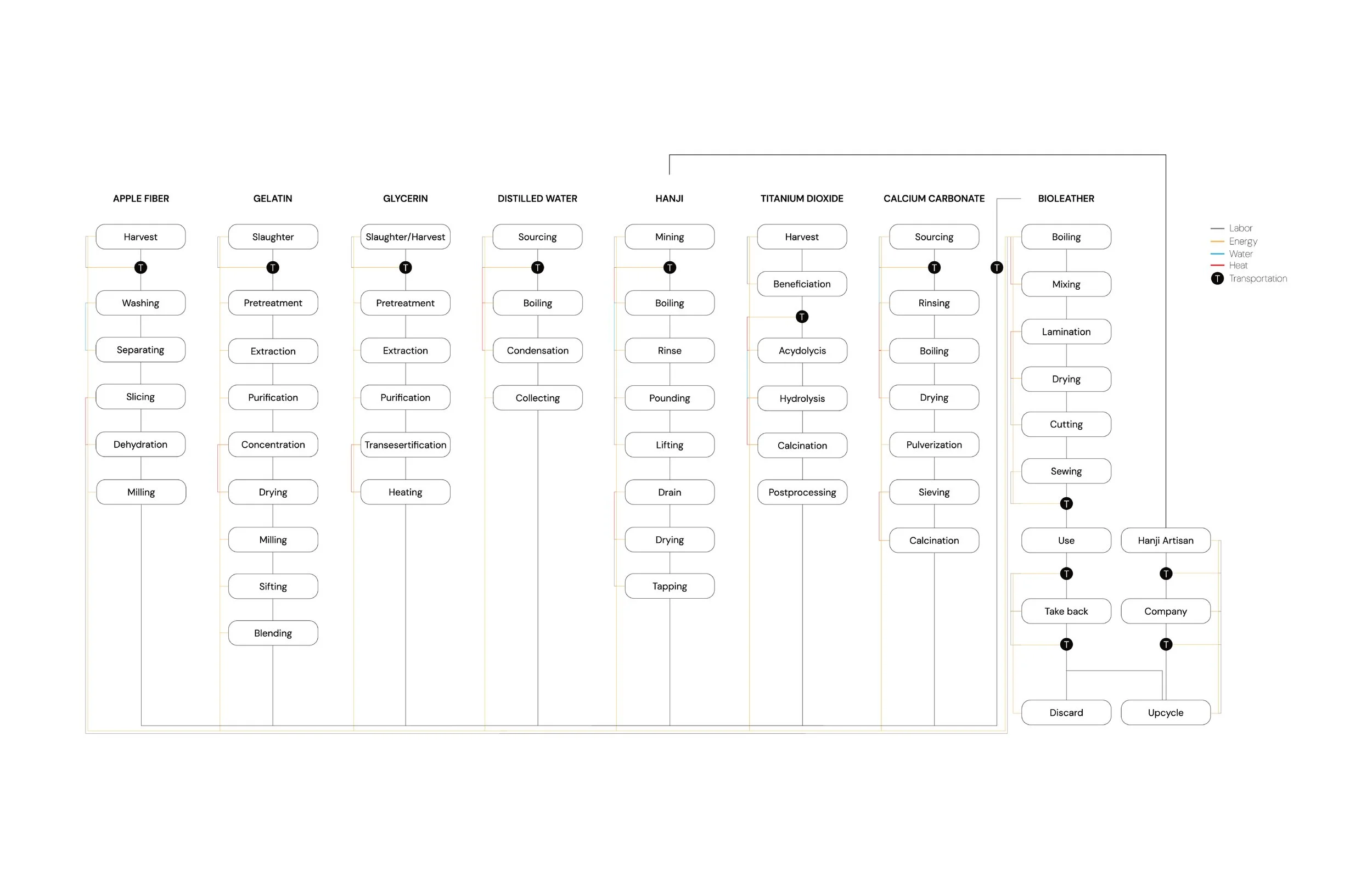
Bioleather life cycle consolidates apple fiber powder, traditional paper craft and mineral fillers into a low-toxicity, recyclable material system.
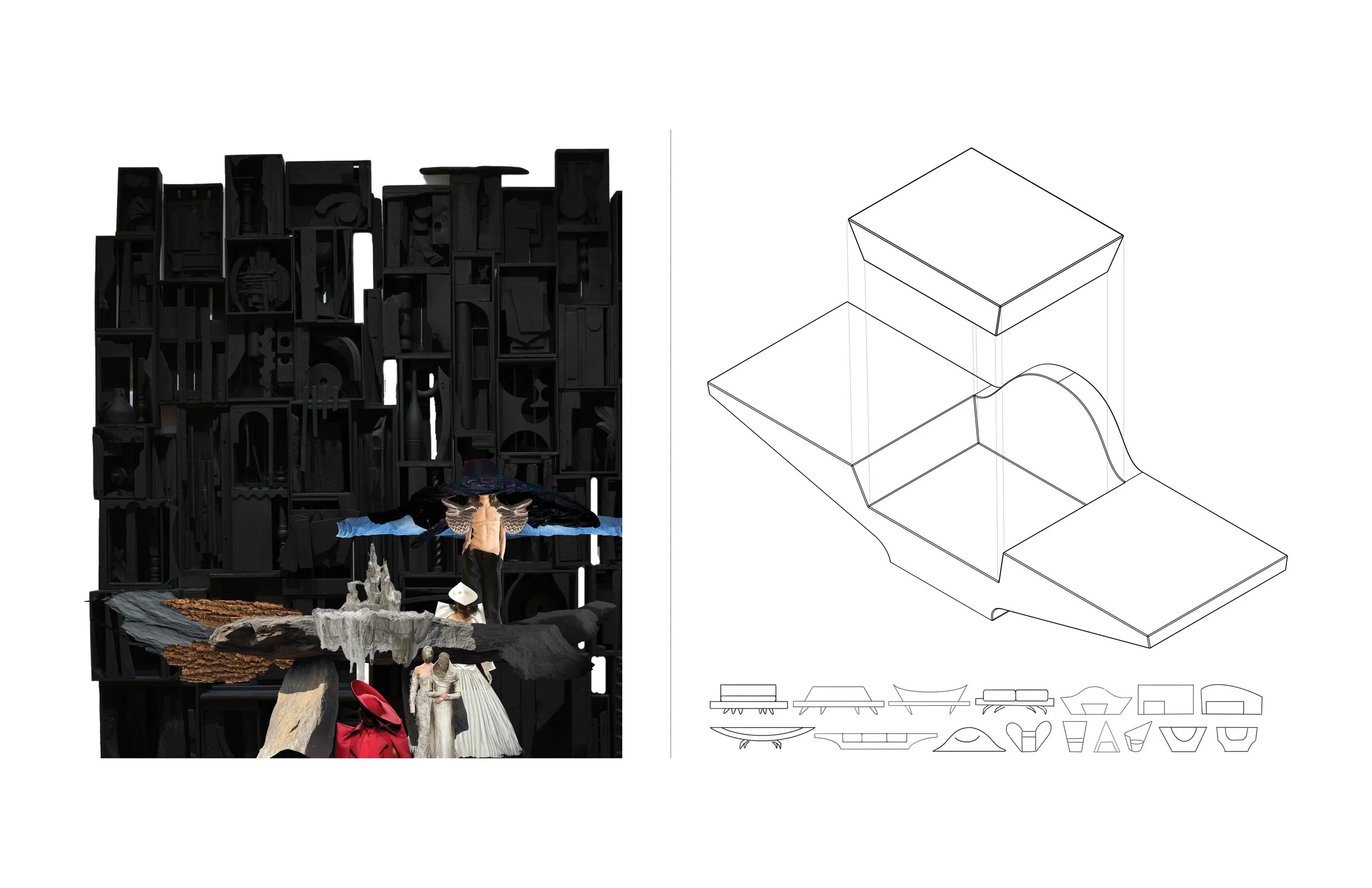
Ideation